
Microfiber Cloth: Still the Pinnacle of Cleaning in the Age of AI and Automation
In a world where artificial intelligence powers self-driving cars, automates customer service, and now even manages robotic vacuum cleaners, it might seem strange to praise a humble piece of fabric. But despite the buzz surrounding high-tech cleaning gadgets, microfiber cloth remains the gold standard of cleaning equipment and for good reason.
The Science Behind the Simplicity
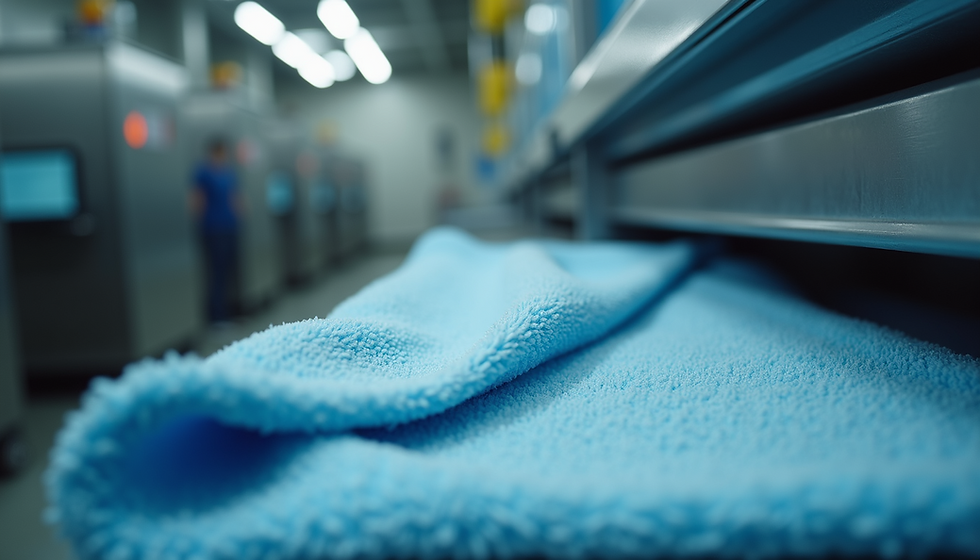
Microfiber isn’t just another cloth. Composed of synthetic fibers, typically polyester and polyamide, split to be finer than human hair, microfiber creates an enormous surface area that traps dirt, oils, and bacteria with microscopic precision. These ultra-fine threads are so effective that they can remove up to 99% of bacteria using nothing but water — a feat that many chemical-dependent, AI-driven solutions can’t consistently replicate without leaving residues.
Unlike traditional cloths that simply push dirt around, microfiber acts like a magnet, lifting and locking in particles. This makes it perfect for streak-free cleaning of glass, screens, stainless steel, and other sensitive surfaces — areas where even robotic cleaners fall short without extensive programming and constant maintenance.
AI-Driven Cleaning: Impressive but Incomplete
From smart mops to robotic vacuum cleaners, automated cleaning is evolving rapidly. Yet, these machines are far from infallible. They can map rooms, detect obstacles, and even adjust suction power — but they can’t wipe down a greasy stovetop or polish a mirror without human assistance. They still rely heavily on microfiber attachments or pads, proving that the material is integral even to automated systems.
Moreover, high-touch and high-detail areas still demand manual cleaning, especially in sectors like hospitality, healthcare, and luxury interiors. AI may suggest optimal cleaning schedules or detect contamination, but when it comes to execution, microfiber-equipped hands do the job best.
Sustainable, Safe, and Cost-Effective
As industries push toward sustainability, microfiber stands out for being reusable, long-lasting, and chemical-free. Unlike many AI-driven cleaning systems that require batteries, electricity, or proprietary refill solutions, a single microfiber cloth can be washed and reused hundreds of times — drastically reducing environmental impact and long-term costs.
In an era concerned with data, carbon footprints, and supply chain resilience, the microfiber cloth is a low-tech solution with high-tech results. It’s efficient, durable, and scalable across industries — from cleaning touchscreens in a smart home to sanitizing medical equipment in an AI-powered hospital.
Where Tradition and Technology Meet
The staying power of microfiber doesn’t mean it resists innovation. On the contrary, leading cleaning equipment brands are now integrating AI-compatible microfiber technologies , cloths embedded with RFID chips for usage tracking, color-coded weaves for robotic identification, and advanced coatings that repel dust while enhancing static charge.
In this hybrid future, microfiber becomes not just a tool, but a core interface between human skill and machine intelligence.
Conclusion
While AI continues to transform the cleaning industry with automation, prediction, and precision, the microfiber cloth stands as a quiet but critical constant — a tool of unmatched efficiency, adaptability, and reliability. It bridges the gap between manual finesse and automated scale, proving that sometimes, the most advanced solutions are built on the simplest foundations.
In a digital age where machines clean the floors and algorithms decide the schedule, microfiber still does the dirty work — and does it better than anything else.
Comments